
Participating in a Range of Activities As a Young Person Is A Key Ingredient To Success as an Adult: A Case Study
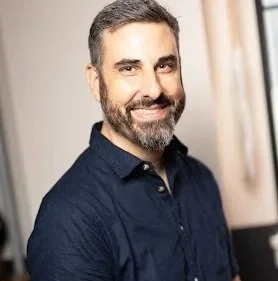
Ben Healy, an accomplished musician and a director at the Brooklyn Music Factory
The cost of screen time isn’t just monthly streaming service subscriptions and Roblox gift certificates. Excessive time spent on devices also crowds out other activities, and no one is affected more than children and teens. A recent article indicates that people who are successful in a particular skill tend to have been engaged in multiple activities growing up. In addition, the same study demonstrated that people who are successful in different fields in adolescence, including athletics, the arts, and academics, are usually not the most successful in those fields in adulthood. The study looked at over 34,000 top performers across many fields, including professional sports, academics, music, and even chess.
I wanted to conduct my own examination of this conclusion by contacting an old friend of mine, Ben Healy. Ben is a successful husband, father, teacher, accomplished jazz pianist, musician, and director of the Brooklyn Music Factory, a music school in New York City. I asked him if I could interview him and write it up for the blog. He said yes. So onto Zoom we went.
A little background on Ben. He grew up in St. Paul, MN. He and I have known each other since 8th grade. During college, he left Minnesota for the Big Apple to pursue his music studies. Ben is an incredibly successful musician; he has taught hundreds of students and performed professionally before thousands of people. His mother was a school teacher and played piano at their church. Ben’s father was a writing instructor at the University of Minnesota and the editor of their neighborhood newspaper, the St. Anthony Park Bugle. He is married and has a teenage son.
I remembered Ben playing piano when we were growing up, and I’m not surprised that he went into music. When he and I talked a few weeks ago, I was surprised to learn that he didn’t realize this would be the focus of his career until he was well into college, which was where our discussion started.
David: When did you know you were going to be a musician? How old were you?
Ben: It wasn’t until I was two years into college. I had other classes, but I didn’t really spend a lot of time on them. What I wanted to do was practice.Until then, there was still potential for me to go into academics. My father was the Director of the Writing Center at General College at the University of Minnesota and a newspaper editor. My mother was a teacher at Eisenhower Elementary. Education was paramount. It was just in the air. Education and learning were part of life in a big way.
Did you do much else when you were growing up besides piano?
I played sports. I had piano lessons. I played soccer at Highland. It wasn’t nearly as popular, and they needed everyone they could get to field a team. I was on JV until I was a senior, and they took mercy on me and let me be on varsity. I just rode the pine. I was on the bench for most of the season. I played saxophone in the band. Let’s see. There was also theater, and you and I were in the school newspaper. I had lots of interests and pursuits. I think if there is any psychology to it, I was always looking for the best experiences to try things out. I also have difficulties cutting things out, so I got to try a little bit of everything. I think this is in all aspects of my life.
How do you think studying and playing music help people in their lives?
I get asked about the auxiliary benefits of studying music. It promotes discipline. It helps with the processing of language. Kids who are exposed to alternating pitch when their mothers sing to them as babies help to build connection. There’re benefits with math, right? It’s true. And many of my students, my son included, really enjoy STEM. And there is a lot of structure in music theory that can be studied. However, I think the biggest benefit of music is the value of creating art for the sake of art. Music for the sake of music. Expression. It helps you become an interesting, creative person. It gives you a place to put things in life. And I think it can create a virtuous cycle. You become more interesting, you get more creative, you get more musical. They build on each other.
What about self-confidence? I remember you being pretty popular at school when you sat down at a piano.
Yeah, that’s true too. ::chuckles:: I’m extrinsically motivated. When I would practice when I was a kid and my dad would sit with me, it made me want to play more. When I was in junior high and high school, I would buy sheet music at the store for pop songs from the radio, and when I played them at school, I got attention. And things like that motivated me. And when you are in junior high, you start developing your own musical tastes. You’re hearing things in the world other than your parents’ voice, so I find jazz. I love these Fats Waller arrangements. I go to a jazz camp, and I like this music, and I want the people there to like me. I hear a guy play, and I want to be like him. He can play all of these jazz standards. I don’t know any of these songs, and I want to know: how can I do this? It was soul-crushing at times. I felt like I was already behind. I felt like I needed to work hard to catch up.
And that’s when you started to focus on jazz?
Yes. And I get to high school, and now the extrinsic motivation is girls and friends. I want to impress them. And I see that in my students. They get to a point where they don’t want to impress their parents anymore. They want to impress their friends, and they have to study music they’re interested in. They want to connect with people. Those are the motivating factors that change as people mature. But I don’t want to make it look like I’m a black sheep or a rebel. My parents helped me find a jazz piano teacher, who was Nate Shaw, and he is where this started.
Let me back up for a second. How hard is it to learn to play music?
Not hard. We have summer camps and holiday camps, and kids come in, and they write a song in a single day. Some of them have never played an instrument before. You can have a 6-year-old walk in here, and by the end of the day, they know 2 chords on the piano and have written a song. I had one student who wrote a song about space aliens, and they are super proud of it, and they perform it in a band with their teacher. A music school can sound like organized chaos, just a wall of sound. But kids are engaged with a group. They collaborate. They perform together in a social setting with an audience. It’s not just about the product, the song, or that they learned chords. They had a social experience. They created. To me, that has an incredibly high value.
One of the things I’ve learned as a father of 13-year-olds is that good music does not need to be hard. My daughter has a book of very easy Taylor Swift piano pieces. Probably 30 of her songs, and when she plays them, you can recognize when she is playing. You can make good music that isn’t incredibly complex.
Right. There is a line, and I can’t remember who said it. It was a musician on a podcast. He said, “Permission is more important than talent.”
I love that.
People gave me permission. I played piano at school, and teachers and administrators asked me to play at school events. I went to camp and counselors asked me to play in bands. I had so many people open so many doors for me. You want to do this? Try this. Try that. Try this band. Take this opportunity. I was presented with opportunities I didn’t know existed. It gave me confidence.
There was a drummer, Kevin Washington, who talked to me about the New School in New York. I had never heard about that. I didn’t even know that school existed. I heard it was a jazz school.
This is when you were at UMD, right?
Yeah. I was attracted to it because it was a jazz school. All the other music schools I auditioned at required you to learn classical first. And I was like, I’m being given permission to audition with jazz. It didn’t come intrinsically. Someone was standing at the door and telling me, ‘Hey, you want to come in?”
I think everyone involved in education, particularly in music education, everyone working with kids and teens, can just hold open a door for someone.
I really like that.
But there is a whole ethos around music education. Particularly higher music education. It’s gated. You have to audition, you have to qualify. You have to be invited. You have to measure up. That discourages a lot of kids. I think they know that is on the horizon stops some parents from even pursuing this. It’s like, if you are not going to practice when you are six years old, you aren’t going to make a college audition.
But playing music is helpful without being a professional.
Absolutely. And it goes back to permission and growing. My parents gave me permission. When I said I wanted to come home from college and practice for a year, and then I was going to audition for a school in New York City, they said ok. I think a lot of parents would be a little concerned about that. That’s a risky choice. But my parents gave me permission, and I will always be grateful for that.
Wow. What was it like to audition?
It was hard. There were hundreds of people auditioning. And that trophy I had from playing saxophone in sixth grade? Everyone had one of those. It wasn’t special anymore. But I think what really helped was remembering all those people who saw potential in me. All those people who took time to give me opportunities. I had enough of it banked. I saw other people who were far more talented than me. Some of them cracked. But I felt I had people who believed in me. It gave me resilience. I knew I would go out there and do the best I could. And I got in.
That is an amazing story.
I want to be clear, that music study works for some people and some families. It doesn’t work for everyone. But I think the important thing is to help people, help our children, help children and teens around us, find things they connect with. Find things that let them pursue passion, education, and serving people. That’s what brings fulfillment.
Ben, thank you so much. There is a lot here. I think I started this conversation expecting one thing and got a lot more than I thought I would.
Well thank you David. I appreciate you giving me permission to talk.
I think if I had anything to add to the paper that inspired this discussion to begin with, it’s the point that Ben made so clearly about the power of adults, especially teachers and family members, to make kids and teens feel confident in themselves. I suspect it is not simply being enrolled in a bunch of activities that helps adults be more likely to be successful; it is children and teens participating in activities where adults around them encourage them, make them feel special, and build their sense of self-confidence.
David Nathan, MBA, PsyD, LP
I offer ADHD and ASD testing in St. Paul, MN. I would love to help you or a loved one if you are seeking an ADHD or ASD evaluation. For more information, please call me at (651) 337-3944 or fill out my contact form.
Disclaimer:
This site is for information only. It is not therapy. This blog is only for informational and educational purposes and should not be considered therapy or any form of treatment. We are not able to respond to specific questions or comments about personal situations, appropriate diagnosis or treatment, or otherwise provide any clinical opinions. If you think you need immediate assistance, call your local emergency number or the mental health crisis hotline listed in your local phone book. Use of this blog establishes your consent to the provisions of this disclaimer.
