
Angels In The Kitchen
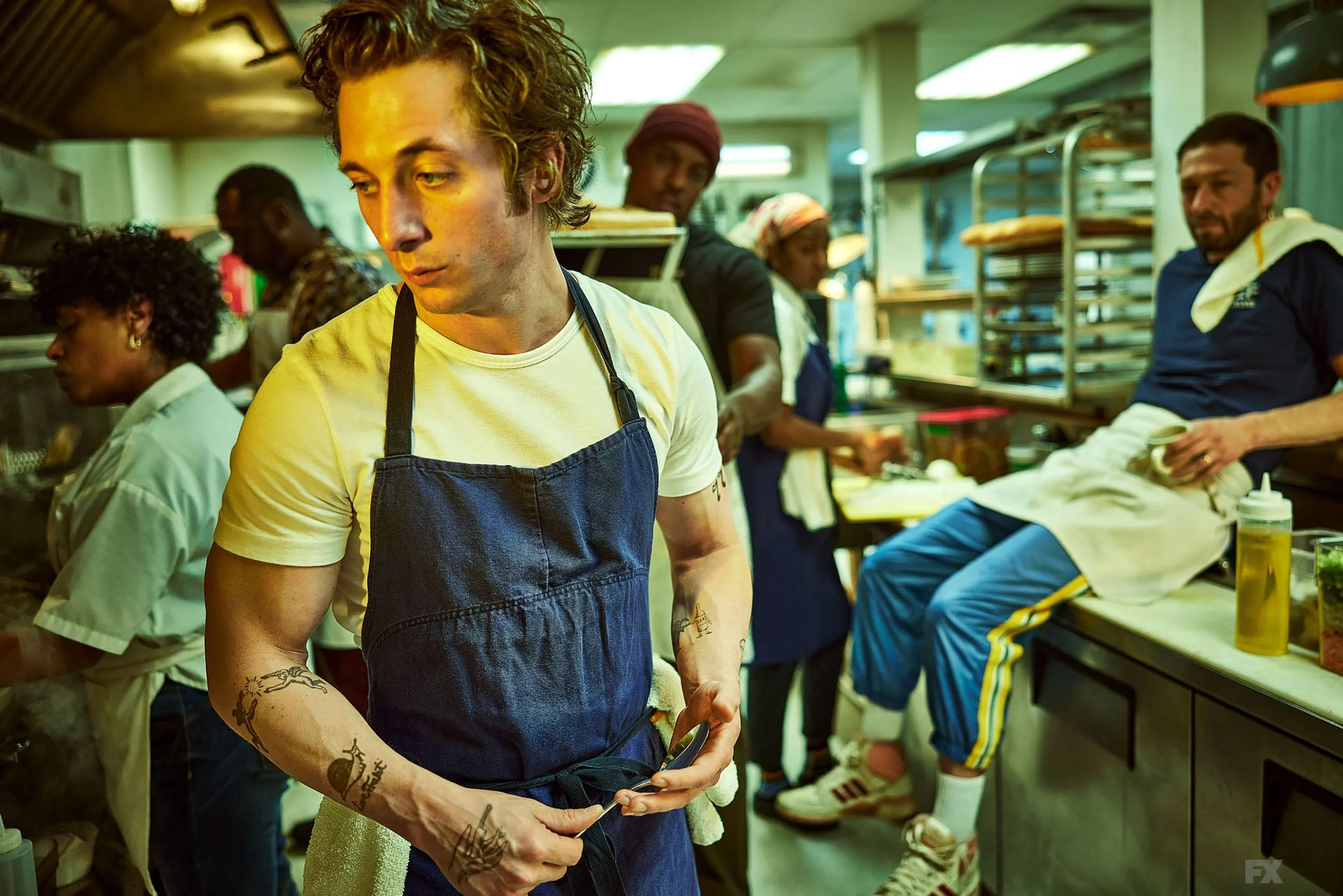
The kitchen of The Bear, a restaurant where cooking ingredients are not the only thing changed for the better.
Content warning. This blog entry includes writing on the topic of substance abuse, generational trauma, and suicide. Please consider if you are in a state of mind in which you can read about these topics without them significantly impacting you before you proceed. There is also a very vague, minor spoiler about the final episodes of the TV series, The Bear.
In 1975, child psychoanalyst, author, and social worker Dr. Selma Fraiberg coined the term "Ghosts in the Nursery" to describe a process by which parents pass on problems and pain they experience in their childhoods to their own children. Her article, co-written with and published in the Journal of the American Academy of Child Psychiatry, was an instant classic, and it made clear that it is impossible for parents to avoid negatively impacting their own children. The author raised many good points and highlighted several clear dynamics through which parents intentionally and unintentionally add stress to their children. The article argued that parenting is too complex, human pain is too deep to be fully contained, and babies, teens, and children are too sensitive not to be affected by caregivers' own difficulties.
This idea became mainstream psychology. It was the 1970's. Pessimism was all the rage. For years, there was a strong sense in developmental psychology that humanity was doomed, that each generation made things slightly worse for the next, and that this slow decay was a fundamental and irreversible aspect of being human.
Thankfully, other mental health care providers recognized that parents can and do keep generational trauma from being passed on. In 2005, Dr. Alicia Lieberman, Dr. Elena Padrone, Dr. Patricia Van Horn, and Dr. William Harris published another article titled "Angels In The Nursery: The intergenerational transmission of benevolent parental influences." This article took on the pessimistic view of unstoppable intergenerational trauma. It demonstrated that parents can and do change the script. It demonstrated the dynamics by which parents prevent painful patterns from being passed on to future generations.
A few weeks ago, the last season of The Bear, an award-winning series with a 93% rating on Rotten Tomatoes on FX, aired, bringing to a conclusion one of the most incredible TV shows I have ever seen.
For anyone unfamiliar with the show, at one level, The Bear is the story of an extremely gifted and hard-working chef, Carmine "Carmy" "Bear" Berzatto, played by Jeremy Allen White, who inherits a hole-in-the-wall sandwich shop, The Original Beef of Chicagoland, from his older brother, Michael, after his brother takes his own life. Over the course of the 5 seasons, Carmine, his protege Sydney, played by Ayo Edebiri, his sister Natalie, played by Abby Elliott, and the staff of The Original Beef turn their small neighborhood restaurant into a world-class dining establishment named The Bear.
But the show is actually far, far deeper than this. This is also a show about a family and their friends coping with profound generational trauma. Each of the three Berzatto children has been deeply affected by the chaos in the home they grew up in. Their father abandoned the family when the children were young, and their mother, Donna, played by Jamie Lee Curtis, suffered from alcoholism.
Other staff members of The Bear wrestle with tremendous difficulties. Several episodes explore the histories and personal lives of the other employees outside of work.
The backstory of Tina, played by Liza Colón-Zayas, is the focus of the third-season episode "Napkins". When the show opens, Tina is a middle-aged woman laid off from her job after years of service. Her husband cannot support the family on his own, and she spends many days desperately searching for a job in Chicago. She is treated with intensely impersonal disregard by potential employers during her job search, often by young people with less experience than her. In a moment of deep despair, she, by chance, walks into The Original Beef to get coffee. After a series of incredibly stunningly kind, generous, and deeply human interactions with the staff, she is offered a job.
One of the things I deeply admire about the show is that it shows both the ghosts and angels of human life. In Fishes, perhaps the most infamous episode of The Bear, we see a flashback to a Christmas at the Berzatto home. While the "Christmas Episode" is a TV staple going back generations, in my experience, no one has ever had a family holiday that measures up to those in the holiday special episodes of Charlie Brown, The OC, Cheers, The Office, Community, 30 Rock, etc. While the specifics of what happens when family and friends are invited over to Donna Berzatto's home for Christmas dinner may be unique to this TV family, I think most people have experienced, or know people who have experienced, situations similar to what takes place at the Berzatto’s home.
But the ghosts are not the point of The Bear. The Angels are.
What happens over the course of The Bear is that the characters grow. The staff of The Bear becomes a family and a team. Psychologists often discuss the quote attributed to Aristotle, "A whole is greater than the sum of its parts." Psychologists consider this both in terms of individuals and the unique skills and difficulties they possess and groups of individuals. Both aspects are themes in The Bear.
Each character grows in their areas of ability and expertise and overcomes complex, deeply rooted troubles. Something I love about the growth of the characters and the team as a whole is that the progress isn’t linear. The characters, the team, and the restaurant itself break down mightily and unexpectedly along the way. There are times when tremendous efforts are made, and little to nothing is shown for it. There are also situations in which the situation seems hopeless, and the team rallies mightily against ridiculous odds, and things miraculously work out. Very minor spoiler: at the end of the series, there are still unresolved problems. But it works. The story is not meant to be a fairy tale where everyone lives happily ever after. The characters do not end up independently wealthy and powerful, but the show makes it clear that they are all better people for having gone through the trials that they have experienced. They are better able to address life's problems and to help others do the same. The show demonstrates how the protagonists have a strength of character that money cannot buy, and that can only be gained through experience, hard work, courage, and the support of others. The show takes pains to demonstrate that no one is perfect, and that even those who have caused great harm to themselves and others can, through time and effort, be healed, heal themselves, and heal others.
There have been many discussions in the media and online about how accurately The Bear depicts working in a restaurant, especially a fine-dining restaurant. As a psychologist, I would also like to offer that the writers knew a great deal about dysfunctional families, how experiences and personality traits mesh together in our minds to form coping mechanisms, how people can both profoundly heal and hurt each other, the impact of trauma on a mind, and human growth and development. I would love to get into each of these topics in great depth, but I suspect non-psychologists would be bored to tears by that analysis. I will say simply that the characters are extremely well written and acted, believable, and genuine. There are one or two deus ex machina character transformations that are possible but somewhat unlikely. Suffice to say, Donna's growth is absolutely possible, as alcoholics can recover, but the speed and amount of change Donna’s character goes through over the course of the show strikes me as extremely unlikely and inaccurate. Similarly, Richie's character changes dramatically over a few days in a single episode. People can absolutely change over time, but this amount of change this quickly makes for great entertainment but is not realistic. In both cases, the kind of change shown in the show would take significantly longer. I say this because I find character growth kind of a magical topic in many stories. In fiction, people can go from dealing with significant struggles to "getting over it" far more quickly, often on their own or without a significant source of support in their lives. In real life, this is not how human development works. Seeing fictional characters (or hearing real-life people give fictional examples of positive change in their lives) can leave people with unrealistic expectations for themselves and others. In real life, changing our mental frameworks and behavior is hard and takes time and support. I think The Bear generally does a very good job of showing the difficulties real people face when healing from trauma and growing as human beings, but in those two cases, it strained my ability to suspend disbelief.
One other critique I have of the show is its emphasis on perfectionism. The Bear presents people being perfect or nearly perfect in a literal way. Sometimes clients discuss their own difficulties with perfection with me. On social media, in shows like The Bear, in conversations with others, we can often feel that if we just work hard enough and/or are good enough, it is fair and reasonable that we would be perfect or close to it in one or more areas of our lives.
This is a lie. It is not possible. I once asked my piano teacher, a gifted player who had studied piano for decades, starting at age 5, if there was a method to learn a song perfectly.
"There is none," she told me. The best piano players don't learn to play perfectly. They make mistakes all the time when they play. The key is to learn how to keep playing when they make a mistake.
This is a profoundly important insight.
Someone watching The Bear (and consuming media in general, and hearing impressive stories from others) should keep in mind that perfection is neither a healthy nor a realistic goal. Perfectionism is a relatively common and clearly unhealthy coping mechanism. The Bear shows how people with significant problems can hide behind impressive qualities and use intense, demanding jobs or hobbies to block out painful thoughts and feelings. It discusses how hiding from painful feelings and thoughts does not actually make them go away and can also make things worse. It discusses how those issues need to be addressed directly and how this takes tremendous courage. I appreciate how honestly the show presents this.
Aside from these examples, the show's writing, acting, and narrative are top-notch. The second-to-last episode of the fifth season of The Bear might be the most satisfying episode of television that I have ever seen. A scene in season 4 in which several adults end up under a table at a wedding, comforting a 5-year-old girl who is afraid to dance and sharing their own fears with her, is incredibly heartwarming. The season two finale of The Bear is the most painful episode of TV I have ever watched, and the season 4 finale is the most uplifting.
There are two other aspects of the show I would like to address.
First, The Bear is a love letter to the city of Chicago. Carmy has a tattoo of the number 773, one of Chicago's area codes, on his left bicep. Chicago's streets, businesses, personalities, and traditions are frequently referenced in the show. Its neighborhoods and the El, Chicago's combination of elevated and subway train system, are featured prominently. The title of the show clearly references the Chicago football team, which may or may not leave Chicago in the next few years. The show is thick with Chicago-related Easter eggs. They greatly enhanced my sense of the show’s authenticity and care for its subject matter, characters, and audience.
Second, I feel very fortunate to be a talk therapist. For years, many of my clients have discussed The Bear with me and told me how much they deeply enjoy it. It is because of them that I started watching it. And it is because of them that I got to experience a show I have enjoyed so much. Much like teachers who benefit and learn from their students, therapists benefit and learn from their clients. This is one of many examples of how working in this profession has changed my life for the better. We don’t have to be parents to be angels. A desire for change, the ability to keep going, a good community, and healthy connections can heal painful pasts and make positive change possible.
Disclaimer:
This site is for information only. It is not therapy. This blog is only for informational and educational purposes and should not be considered therapy or any form of treatment. We are not able to respond to specific questions or comments about personal situations, appropriate diagnosis or treatment, or otherwise provide any clinical opinions. If you think you need immediate assistance, call your local emergency number or the mental health crisis hotline listed in your local phone book. Use of this blog establishes your consent to the provisions of this disclaimer.
